


HISTORY OF TRACKDOWN
1972 - DELTA SOUND
Trackdown Studios began its journey in 1972 when high school students Simon Leadley and Greg Creecy launched a small business called Delta Sound out of Greg’s parents’ living room in Sydney. Simon and Greg built amplifiers and speaker boxes from scratch, planting the seeds of what would become one of Australia’s most iconic audio post-production companies. By 1975, their love for music pulled them further into the scene—forming a glam rock band called Orion, and even deferring university for a year in the hopes of making it big. The band quickly folded, but the experience fueled their dedication to creating spaces where musicians could thrive.

1976 - ESMA STUDIOS
1976 - 1980
In 1976, the duo of Simon Leadley and Greg Creecy, with the addition of Geoff Watson, discovered a dusty, abandoned photographic studio on Oxford Street and transformed it into one of Sydney’s first commercial rehearsal studios. Known as Esma Studios (affectionately nicknamed “Asthma” due to its air quality), the space was outfitted with PA systems for hire and a modest 4-track recording setup. It quickly became a word-of-mouth hotspot for local bands. But when developers moved in a few years later to demolish the building, the team faced a critical decision: give up or go bigger.


1980 - The Studio
1980 - 1983
Roaring into the 80’s, they relocated to a former HCF warehouse at 330 Kent Street, this time going simple with the name…”The Studio”.
There, they built three professional rehearsal rooms and a small 4-track demo studio—attracting legendary Australian acts like;
-
INXS, who recorded all their demos for “Underneath the Colours”,
-
Do Re Mi,
-
The Church,
-
Midnight Oil
-
and The Divinyls, the last of which would recruit Simon and Geoff to be their test audience.
It was during this era that Tim Ryan joined the team, and Simon began touring with Icehouse, signaling the start of a new chapter in Trackdown’s evolution.


1983 - Trackdown BONDI
1983 - 1989
Come 1983, the team relocated once again—this time to Bondi Junction, setting up in a pair of small basement rooms beneath Hutchings Keyboards. It was here that Simon Leadley built Sydney’s first half-inch 16-track recording studio, using the Fostex B16, and where the business officially adopted the name Trackdown.
The studio quickly became known for its technical innovation, becoming the first in Australia to use Sony’s PCM701 digital 2-track system for final mastering. This period marked Trackdown’s first major step into audio post-production, beginning with dialogue recording for Yoram Gross Film Studios.
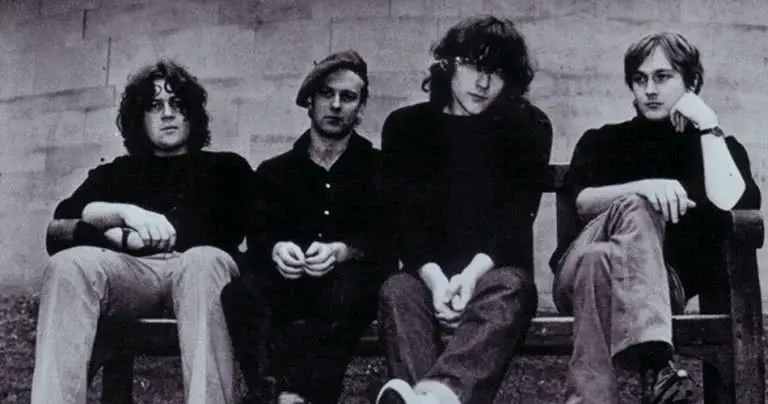
Alongside its growing film work, the studio continued recording music for prominent and emerging Australian artists—including Paul Kelly’s 1987 release “Bradman”, which was the B-Side to the single “Leaps and Bounds”, “The Saints”, and a wave of indie bands carving out their place in Australia’s music scene.




1989 - TRACKDOWN CAMPERDOWN
fROM 1989
As the team stepped into the 90’s, Trackdown entered a defining new chapter with the construction of a purpose-built studio complex in Camperdown, located inside the Yoram Gross Studio building.
This was the first time the team had the opportunity to design and build a professional recording environment from the ground up—an enormous leap in capability and ambition. The move deepened Trackdown’s relationship with Yoram Gross Film Studios, where they worked on animated projects including Blinky Bill and Dot & the Kangaroo, positioning the company firmly within the world of screen production and accelerating its pivot toward audio post.
This era also cemented Trackdown as an early technological pioneer. Under Simon Leadley’s guidance, the studio became one of the first in Australia to embrace a full DAW workflow, experimenting with Sound Designer (the early precursor to Pro Tools). Tim Ryan and Les Fiddess laid up sound effects for the feature film Fatal Bond—released in 1991—placing these innovations early in the decade, long before non-linear digital editing became industry standard. This bold adoption of emerging technology set Trackdown apart and shaped its future direction.
Music remained a core part of the studio’s identity. The new Camperdown facility hosted major album projects, including Midnight Oil, produced by Nick Launay, whose sessions benefited from the upgraded rooms and expanding engineering talent. Around this time, Trackdown also formed a significant partnership with Iva Davies of Icehouse. Iva contributed his Otari 24-track tape machine and mixing console, while Simon and Geoff added Dolby SR—collectively transforming Trackdown into a truly competitive and professional destination for both bands and screen composers.


1998 - FOX STUDIOS
TRACKDOWN MUSIC SERVICES
In 1998, the studio expanded into Soundfirm by invitation, establishing dedicated music editing rooms. This move attracted major screen composers, including Guy Gross, who relocated his composing suite to Soundfirm.
During this period, Tim Ryan and Simon Leadley were also collaborating on Moulin Rouge, a project that would later bring significant recognition to the Trackdown team.
The rooms at Soundfirm were built by Tim, Simon, and Geoff themselves—further reinforcing Trackdown’s long-standing reputation for technical ingenuity and hands-on excellence.
With the decade drawing to a close, Trackdown had firmly established its dual identity: a forward-thinking, technically innovative audio post facility and a creative hub for both musicians and screen composers. These foundations would soon enable the studio’s next leap into large-scale orchestral scoring and high-profile international film work in the 2000s.


2003 - entertainment quarter
2003 - TODAY
The mid-2000s marked a major period of growth for Trackdown as the company expanded its footprint within the Fox Studios Australia lot—not only adding its world-class orchestral scoring stage, but also establishing a fully equipped TV studio. These purpose-built facilities significantly broadened Trackdown’s capabilities, enabling the team to support everything from large-scale orchestral recordings to television shoots, live performances, and multi-camera production.
During this time, Trackdown also welcomed several key team members who would help shape the company’s identity for years to come.
In 2004, Elaine Beckett joined as an intern, moving into a core management role by 2008, where she became instrumental in project coordination and studio operations.
Craig Beckett came onboard in 2006, working his way up as a junior strengthening Trackdown’s music editing and technical capability with his precision and musical insight.
Throughout the 2000s, Trackdown contributed to an expanding slate of major screen projects including Happy Feet, Happy Feet Two, and Baz Luhrmann’s Australia.
Following the passing of co-founder Simon Leadley in early 2010, Trackdown honoured his legacy by officially naming its world-class orchestral facility The Simon Leadley Scoring Stage. Over the decade that followed, the studio cemented its place as Australia’s leading hub for scoring, music editing, and audio production across film, television, streaming, and games.
Trackdown’s work expanded into major international features—including The Great Gatsby, Furiosa: A Mad Max Saga, Kingdom of the Planet of the Apes, and a growing relationship with Marvel, contributing to projects such as What If?, Echo, and Ironheart. Under Geoff Watson's production company, the studio worked on tv animation titles; Tales of Aluna, Sally Bollywood, and Nate Is Late.
Trackdown strengthened its presence in game scoring, hosting sessions for World of Warcraft, Diablo, and a wide slate of Japanese game titles. On the music editorial and production side, Trackdown contributed to major Australian successes including Boy Swallows Universe and Better Man, alongside an expanding roster of local and international series.
A new generation of talent joined the team during this period, with Liam Moses starting as a freelance sound editor in 2017 and becoming full-time in 2020, bringing contemporary technical expertise and fresh creative insight to the department.
Today, Trackdown stands as a globally recognised scoring and post-production facility—pairing state-of-the-art stages with a multigenerational team to support the next wave of screen storytelling across Australia and the world.


